What Is a Piezoelectric Buzzer?
By definition, a "buzzer head" refers to a sound-emitting component that uses piezoelectric ceramics as the electroacoustic transducer. In terms of parts, it is mainly composed of an astable multivibrator (oscillator), a piezoelectric buzzer plate, an impedance matching circuit, a resonance chamber, and an outer housing. Compared with other buzzer products, it also has the following characteristics.
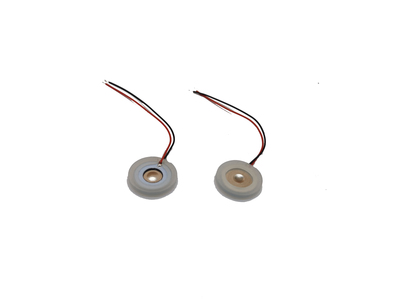
Key Characteristics of Piezoelectric Buzzers
- No interference: This component does not produce arcing or radio-frequency noise, does not interfere with other circuits, and will not cause large vibration even when loose.
- Rich sound output: Because it is controlled by electronic circuits, it can produce a variety of pleasant sounds, simulated sounds, and intermittent tones. The timbre is pure and it is not easily masked by background noise.
- Easy to install and safe: The piezoelectric buzzer is easy to mount, has no electromagnetic coil or moving coil, no need to worry about insulation deterioration, and no possibility of leakage.
- Low power consumption: It is driven by voltage excitation, so the current consumption is small — generally below 20mA and never exceeding 100mA.
A piezoelectric buzzer produces sound through mechanical deformation caused by the inverse piezoelectric effect, making it a type of electroacoustic conversion device. These products are widely used for alarm and sound functions in many electrical appliances, especially in music greeting cards, electronic watches, and pocket calculators. To ensure quality, you should select the right product carefully. Below we recommend several methods for selecting a piezoelectric buzzer.
How to Select the Right Piezoelectric Buzzer
Method 1: Select by Voltage Level
Buzzers are generally driven by a square wave. The higher the voltage, the louder the sound.
Method 2: Select by Size
Selecting a buzzer by size is also common, mainly because size affects frequency. Generally speaking, smaller sizes have a higher frequency.
Method 3: Select by Pin Pitch
Pin pitch can also be used as a criterion. This factor matters because piezoelectric buzzers come in many specifications, and it is often hard to find an identical one. In that case, you can first pick a similar model with a close frequency and try it.
Repairing a Piezoelectric Buzzer: Step by Step
After a simple analysis of piezoelectric elements, piezoelectric buzzers, and electromagnetic buzzers, you should now have a good grasp of the basic knowledge. Damage will inevitably occur during use. If there is no suitable replacement available and the situation is urgent, can you repair it yourself? Below we focus on piezoelectric buzzers and explain how to repair common problems.
A piezoelectric buzzer is mainly composed of a piezoelectric ceramic plate, a step-down circuit, an oscillation circuit (or a music integrated circuit), an acoustic resonance chamber, and connecting wires. It uses the alternating voltage generated by the electronic oscillation circuit, which is applied to the piezoelectric ceramic plate, causing the plate to vibrate. The vibration is then amplified by the resonance chamber to produce a loud buzzing sound.
Therefore, any fault in any part of the circuit will definitely cause the buzzer to stop producing sound. Some common causes include:
- The step-down resistor is burned out or damaged;
- The transistor or integrated circuit is damaged;
- The lead wire of the piezoelectric ceramic plate is broken.
Before you actually start repairing, use a multimeter to check the entire circuit and see whether the lead wires are broken. If not, start testing the internal circuit. For example, if you find that a load component is damaged, replace it with a component of the same specification and model. Piezoelectric buzzers usually seal the components inside a plastic housing, so before repairing you need to pry open the housing with a small knife. After finishing the repair, re-seal it with glue. This is mainly done to prevent the electronic components from being affected by moisture.