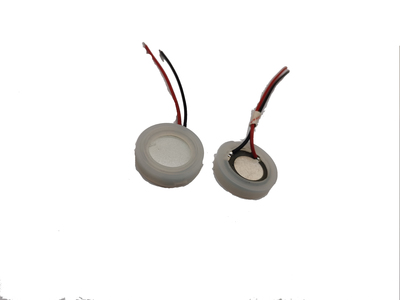
Why Buzzer Parameter Matching Matters
An atomizing or indicator buzzer works as an electroacoustic device that converts electrical energy into the vibration of a vibrating plate through the electromagnetic effect. When an electrical signal of a specific frequency passes through the coil inside the buzzer, an alternating magnetic field is generated. The iron-core bracket in the center of the coil strengthens this magnetic field and drives the vibrating plate on the magnetic ring to vibrate and produce sound.
For a standard passive electromagnetic buzzer, the key electrical parameters include: coil resistance, rated voltage, SPL (sound pressure level), current consumption, and the operating voltage range. Matching these parameters correctly when you design your circuit is essential to reliable performance.
How to Match the Parameters: A Real-World Example
Suppose you choose a buzzer with the following specification: rated voltage 5Vo-p, input frequency 2000Hz, DC coil resistance 42Ω, SPL at least 85dB measured at 10cm under rated conditions, current consumption no more than 70mA, and an operating voltage range of 3-7V.
When you design the driving circuit for this buzzer, you must satisfy the following conditions:
- Input signal frequency: 2000Hz is optimal. The frequency output from the MCU (CPU) I/O port is usually quite accurate. If the frequency error from other sources is large, keep two principles in mind: first, keep the frequency error within 100Hz; second, bias the design toward the upper tolerance — that is, do not use a frequency below 2000Hz. Design around 2000-2100Hz. Because when the frequency fed in is below 2000Hz, some buzzers become much quieter (this is caused by the unavoidable tolerance of the buzzer's start-up frequency point). When the frequency is above 2000Hz, the buzzer's factory start-up point does not exceed 2000Hz, so any signal above the start-up point will drive the buzzer reliably without becoming quiet. Above 2000Hz, only a small portion of products will drop slightly in SPL (usually within 5dB — hardly noticeable by ear). If your circuit cannot meet these requirements, you must use a custom-designed buzzer.
- Signal voltage: The voltage applied to the input of the buzzer must be correct.
- Amplifier saturation: The transistor driving the buzzer must be fully saturated. The input signal of the amplifier must be strong enough to saturate the transistor. This can usually be adjusted by tuning the value of resistor R1 in the circuit.
- Series resistor: If no special requirement exists, a 0Ω series resistor can be used. If you need current-limiting for system protection, the limiting resistor should preferably be 42Ω or below. After adding a limiting resistor, the SPL will drop slightly — typically no more than 5dB.
- Operating voltage: The working range is 3-7V. Below 5V the SPL decreases accordingly; above 5V it increases. You can test the actual SPL in your application. It can even work below 3V, but the SPL will drop significantly.
Piezoelectric vs. Electromagnetic Buzzers
A piezoelectric buzzer uses the piezoelectric effect of piezoelectric ceramics to drive a metal plate to vibrate and produce sound. An electromagnetic buzzer works on the principle of electromagnetism: when power is applied it pulls down the metal diaphragm, and when power is removed the diaphragm springs back.
Piezoelectric buzzers are driven by a square wave, while electromagnetic buzzers are driven by a 1/2 square wave. Piezoelectric buzzers need a relatively high drive voltage to reach sufficient sound pressure — generally recommended at 9V or above. Some piezoelectric buzzer specifications can reach above 120dB, and large sizes easily reach 100dB.
An electromagnetic buzzer can output more than 85dB with just 1.5V, but its current consumption is much higher than a piezoelectric buzzer. At the same size, electromagnetic buzzers can achieve a lower resonant frequency, and their SPL is generally around 90dB at most.
Piezoelectric buzzers have a simple, durable structure but a monotone, less rich tone quality, making them suitable for devices such as alarms. Electromagnetic buzzers, with better tonal quality, are mostly used in voice and music applications.
How to Distinguish Passive and Active Electromagnetic Buzzers
Passive buzzers have no internal driving circuit. Some companies call them "sounder" and in the national standard they are referred to as acoustic signalers. The ideal signal for a passive buzzer is a square wave. If a DC signal is applied, the buzzer will not respond because the magnetic path is constant and the metal plate cannot vibrate to produce sound.
Method 1: Visual Inspection
In the buzzer model number, "C" generally represents passive while "D" represents active. Passive and active buzzers look extremely similar. When you place both types with the pins facing up, the one with a green PCB board is a passive buzzer, while the one sealed with black resin and no PCB is an active buzzer. However, this is only a preliminary judgment and is not the only standard. The smallest piezoelectric passive buzzer currently on the market is 12.5*6mm in dimension. With market development, many manufacturers now seal the bottom of 12MM buzzers with glue for stability and to prevent the core from falling off, so visual inspection is only an initial identification method.
Method 2: Multimeter Resistance Test
Set the multimeter to the resistance R×1 range. Connect the black probe to the "+" pin and tap the other pin with the red probe. If you hear a "click, click" sound and the resistance is only 8Ω (or 16Ω), it is a passive buzzer. If it produces a continuous sound and the resistance is several hundred ohms, it is an active buzzer.
Method 3: DC Voltage Test
Generally, a 12MM passive buzzer uses 1.5V, while active electromagnetic buzzers commonly use 1.5V, 3.0V, 5.0V, 9.0V or 12V. Apply the corresponding DC voltage (you can increase from small to large) at approximately 2.7kHz. If the buzzer sounds directly, it is an active electromagnetic buzzer. If it does not sound directly but requires a square wave to drive it, it is a passive electromagnetic buzzer.
How to Keep a Buzzer Working for a Long Time
Many users focus on price when choosing a buzzer and ignore its electrical performance parameters, which often causes mismatching between the buzzer and the PCB driver circuit and leads to various quality problems. Matching the buzzer to the PCB circuit is the best way to get the longest service life and the most reliable operation. In addition, pay attention to the following points during use:
- Soldering temperature that is too high can cause the buzzer housing to deform and the pins to become loose, resulting in no sound or low volume.
- If the buzzer start-up voltage is too low or too high, the buzzer may produce a low sound or a raspy sound during operation.
- If a stored buzzer sounds low and returns to normal after some use, it may be affected by humidity. Pay attention to moisture protection.
- If a buzzer works with tone drift or no sound when installed on the PCB but tests normally when tested alone, it may be caused by magnetic field interference.