How Does an Electromagnetic Buzzer Work?
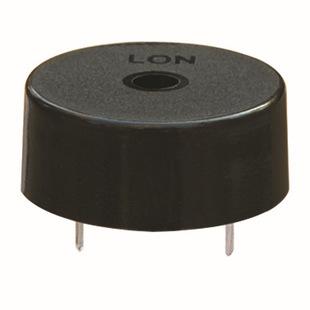
An electromagnetic buzzer works on a simple principle: an AC signal passes through a coil wound on an iron bracket, generating an alternating magnetic flux on the core column of the bracket. This alternating flux superimposes with the constant magnetic flux of the magnetic ring, causing the reed plate to vibrate at the frequency of the given AC signal and, together with the resonance cavity, produce sound. It serves as the sound-generating component of electronic products.
An active (self-drive) buzzer is an integrated electronic sounder powered by DC voltage. It is widely used as a sounder in computers, printers, copiers, alarms, electronic toys, automotive electronics, telephones, timers, and other electronic devices.
What Is Ripple Interference?
While an active electromagnetic buzzer is working, ripple current or ripple voltage refers to the high-order harmonic components in the current, which cause fluctuations in current or voltage amplitude. The rated ripple current IRAC specifies the ripple as a sine wave at a standard frequency of 100Hz to 120Hz. As a result, both the fluctuation of current or voltage amplitude and the 100Hz to 120Hz sine wave signal create unstable power supply and signal interference for the buzzer. This can cause the buzzer to produce no sound or fail to respond. For high-end finished products, this poses a potential hazard that must be eliminated during the design stage.
The Professional Solution
As a professional buzzer manufacturer, we recommend adding corresponding resistor-capacitor (RC) elements to the driving circuit that excites the active electromagnetic buzzer. By filtering out the ripple current generated during operation immediately, the interference can be overcome and sound distortion can be prevented.
Putting customers first is the philosophy Shengqun has always upheld. By continuously thinking and innovating, we help our customers create new value.