Quality Identification and Characteristics of Atomizing Buzzer Plates
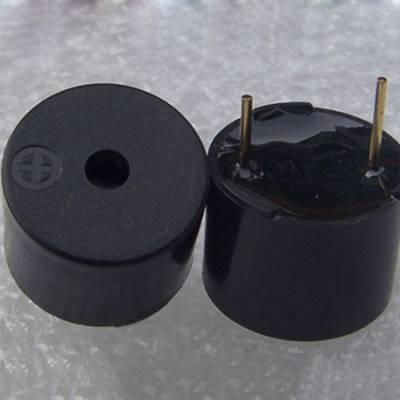
Quality Identification Method
A mechanical multimeter can be used to conveniently test the quality of buzzer plates. The method is as follows:
Set the multimeter to the 25V range. Gently hold both sides of the buzzer plate with the thumb and index finger of your left hand. Hold the two test probes in your right hand, with the red probe close to the ceramic piece and the black probe placed horizontally on the surface of the buzzer plate. Then, press firmly with your left thumb and index finger and release immediately. The buzzer plate will successively generate two voltage signals of opposite polarity, causing the pointer to swing right - return to zero - swing left - return to zero, with an amplitude of approximately 0.1-0.15V.
If you swap the probe positions and repeat the test, the pointer swing sequence will be: left - return to zero - right - return to zero. Under the same pressure, the greater the pointer swing amplitude, the higher the sensitivity of the buzzer plate. If the pointer does not move, it indicates internal leakage or damage to the buzzer plate.
Characteristics of Buzzer Plates
- Clear sound quality
- Ultra-thin and lightweight
- Contactless, noiseless, and highly reliable
- Low power consumption
- Large displacement at low voltage
- Fast response
- High energy conversion efficiency
- No electromagnetic interference
- Wide operating temperature range